


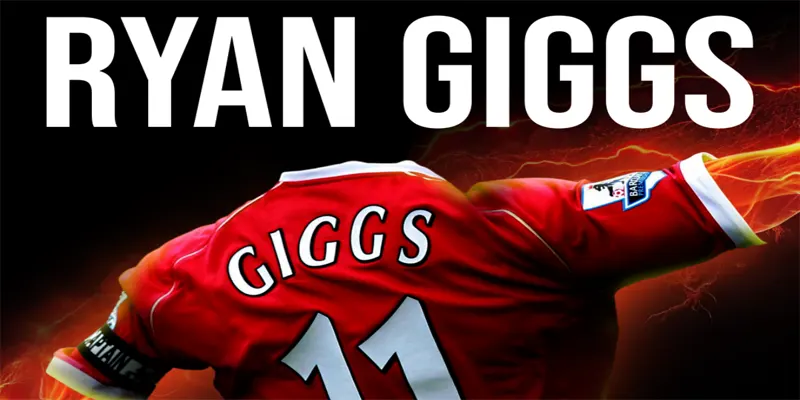
The name Ryan Giggs is synonymous with Manchester United’s golden era, a testament to unprecedented talent and unwavering loyalty. Spanning over two decades, his professional career is perhaps the most decorated in English football history, setting benchmarks that remain unchallenged. For those seeking the definitive story of this Welsh wizard, from his electrifying debut to his lasting legacy, this comprehensive analysis is your essential guide to understanding the true impact of an iconic career, a perfect example of sustained excellence in top-flight football. Discover the depth of his contribution to the beautiful game with GO8.
The Welsh Wizard: Rise to Prominence and Early Glory
Born in Cardiff, Wales, Giggs’s journey began with a brief spell at Manchester City before he joined the Manchester United academy at the age of 14, a pivotal moment orchestrated by the legendary Sir Alex Ferguson. His natural athleticism, blinding pace, and exquisite ball control immediately set him apart from his peers. The early 1990s witnessed the emergence of the famed “Class of ’92,” and Giggs was undoubtedly the brightest star among them. His full debut in March 1991 against Everton, followed by his first goal against Manchester City, signalled the arrival of a generational talent.
It was quickly clear that Ryan Giggs was not merely a promising youngster but a game-changer. His ability to execute dazzling runs down the left flank, often leaving multiple defenders in his wake, became Manchester United’s most potent attacking weapon. The 1992-93 season marked a breakthrough, establishing him as the Premier League’s youngest regular. His consistent delivery of goals and assists was instrumental as United clinched their first league title in 26 years. This early success set the tone for a career defined by winning, making him an instant favourite among the Old Trafford faithful. If you want to follow the latest news and updates from football legends around the world, make sure you Khuyến mãi GO8.
Premier League Dominance and Unmatched Longevity
The core of Ryan Giggs’ legacy lies in his extraordinary longevity and consistency in the physically demanding Premier League. He seamlessly adapted his game through various tactical eras and against evolving defensive challenges. From a jet-heeled winger who scored iconic solo goals—most notably his mesmerising effort against Arsenal in the 1999 FA Cup semi-final—he matured into a deep-lying, authoritative central midfielder. This tactical evolution ensured that even as his acceleration waned, his vision, passing range, and footballing intelligence made him irreplaceable.
He holds the unparalleled record of winning 13 Premier League titles, far surpassing any other player in the competition’s history. This relentless appetite for silverware demonstrates a champion’s mentality and an ability to consistently perform at the highest level across multiple generations of teammates and opponents. The 2007-08 season saw him score the penalty that secured the Champions League title against Chelsea in Moscow, cementing his status as one of the few players to have won every major honour available at club level multiple times. His influence extended beyond his technical skills; he became a crucial leadership figure, mentoring younger players and embodying the club’s winning culture. For Ryan Giggs, success was simply the expected standard.
International Ambitions and the Welsh Identity
While his club career was defined by overwhelming collective success, Ryan Giggs’ international career presented a different narrative. As a player for Wales, he never had the opportunity to compete at a major international tournament, a frequently cited source of disappointment for the nation’s “Golden Generation.” Despite this, his commitment to the Welsh cause was unquestionable. He earned 64 caps for the national team between 1991 and 2007, often carrying the burden of expectation for a side that lacked the consistent quality of his Manchester United squads.
His performances for Wales showcased the same dazzling attributes—electric wing play, pinpoint crossing, and exceptional free-kick ability—but the team’s structural challenges often proved too large to overcome in qualifying campaigns. Giggs’s dedication was later recognised when he was appointed the captain of the Great Britain Olympic football team at the 2012 London Games, a significant personal honour. This phase of his career, while less adorned with medals, highlights the professional pride and national identity that drove Ryan Giggs throughout his playing days.
Transition to Management and Contemporary Impact
The conclusion of his playing career in 2014 was quickly followed by a transition into coaching. Ryan Giggs served as an interim manager for Manchester United following David Moyes’ departure, overseeing four matches before becoming assistant manager to Louis van Gaal. This period marked his formal entry into the strategic side of the game, learning the complexities of high-level management.
In 2018, he accepted the role of manager for the Wales national team, arguably his most significant post-playing challenge. His objective was clear: to lead the talented, newly established Welsh side to their first major tournament since 1958. Giggs successfully guided the team through the Euro 2020 qualifying campaign, culminating in the team’s appearance at the tournament in 2021. However, off-field issues led to his departure from the role in June 2022. Despite this interruption, his tenure marked the transition of Ryan Giggs from player to national team builder, demonstrating a clear aptitude for modern international football strategy. His experience at the top level, both as a player and coach, provides him with unique insights into the psychology and demands of the elite game. The indelible mark left by Ryan Giggs is undeniable.
The Enduring Legacy of a Modern Football Icon
The legacy of Ryan Giggs is multifaceted. He represents the ideal of a one-club man, a rare breed in the modern, commercially driven world of football. His records—including 963 appearances for Manchester United and 34 trophies—may never be broken. Beyond the statistics, he is remembered for his revolutionary skill set, combining the flair of a classic winger with the efficiency of a modern athlete. His successful adaptation from a touchline-hugging wide player to a central playmaker is a textbook example of career evolution driven by intelligence and desire.
Ryan Giggs remains an enduring figure in football commentary and media, his opinions carrying the weight of a player who experienced nearly everything the sport has to offer. His career serves as an ultimate case study in professional excellence: a demonstration that talent, when paired with dedication and adaptability, can thrive for an astonishing length of time at the very apex of the global game. He is, quite simply, Manchester United’s greatest ever homegrown talent and a towering figure in the sport’s modern history.


